
Fair Play, Software Integrity, and Cybersecurity Standards
অফিশিয়াল প্রসেস টাইমলাইন
This document establishes the technical security standards, testing benchmarks, and software validation protocols our editorial board uses to evaluate online gaming operators in Bangladesh. In a digital environment where real financial transactions take place, player protection depends entirely on robust cybersecurity, certified Random Number Generators (RNG), cryptographic verification algorithms, and strict data privacy protocols.
Our portal conducts technical audits to verify that gaming outcomes are statistically fair and unmanipulated, that payment gateways protect sensitive financial data, and that operators adhere to international software testing standards.
The Four Pillars of Technical Gaming Security
Every online casino and sports betting platform must maintain four foundational security layers to be considered safe for real-money play:
| Certified RNGs | SSL / TLS Encrypt | Provably Fair | Financial Data |
|---|---|---|---|
| Independent tests | 256-bit transport | SHA-256 hash | Secure token- |
| confirm outcomes | security protects | checks let users | ized gateways |
| match published | logins & personal | verify game | protect MFS |
| statistical math. | account data. | round seeds. | credentials. |
- Certified Random Number Generators: Ensuring that outcomes in digital slots, table games, and virtual sports are mathematically unpredictable and independent of previous results.
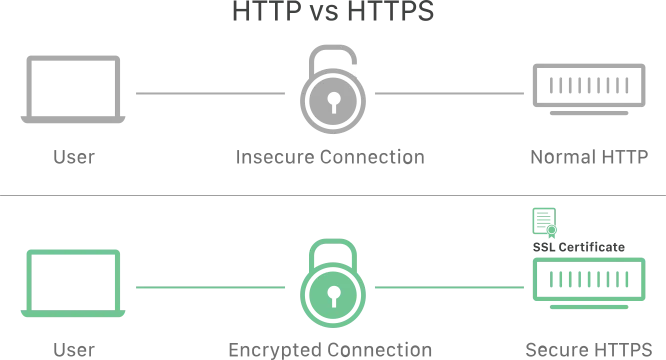
- End-to-End Transport Encryption: Utilizing modern 256-bit SSL/TLS encryption protocols to secure player account data, login credentials, and communication logs against interception.
- Provably Fair Cryptographic Verification: Offering public hash verification mechanisms in crash and instant-win games, allowing players to confirm that round results were established before bets were placed.
- Financial Security and Tokenized Transactions: Implementing secure Mobile Financial Service (MFS) payment protocols that protect personal bKash, Nagad, and Rocket PINs from exposure.
To learn more about how our technical research team audits these systems, review our Review Methodology and Editorial Policy.
Random Number Generator (RNG) Certification and Testing Laboratories
In games without physical dealers—such as video slots, digital blackjack, and electronic roulette—the fairness of every outcome depends on a Pseudorandom Number Generator (PRNG).
How Certified RNGs Function
A certified PRNG uses complex mathematical algorithms (such as the Mersenne Twister or cryptographically secure hashing functions) to produce sequences of numbers that simulate true randomness. These numbers map directly to visual game outcomes, such as reel symbol alignments or card deals.
Key characteristics of legitimate RNG systems include:
- Statistical Uniformity: Over millions of rounds, every possible number or combination appears with equal mathematical probability, ensuring the game conforms to its designed Return to Player (RTP) specification.
- Unpredictability: Knowing past outcomes provides zero mathematical insight into future results. Neither players nor operators can predict the next sequence.
- Independence: Each game cycle is completely distinct. Concepts like "due for a win" or "cold machines" are mathematically invalid in certified RNG environments.
RNG Independent Audit Lifecycle
- Game Developer (Creates slot with 96.5% mathematical target)
- ▼ Accredited Testing Laboratory (GLI / eCOGRA / BMM Testlabs)
- Runs Diehard battery tests & Chi-Square uniformity tests
- Analyzes source code across 10,000,000+ simulated game cycles
- ▼ Official Certification Issued (Validates math model & seals code)
- ▼ Licensed Operator Hosts Game (Connects directly to provider's server)
Accredited Independent Testing Agencies
Legitimate operators do not test their own games. Independent certification must be granted by internationally accredited testing bodies:
- Gaming Laboratories International (GLI): A globally recognized testing and certification body operating across hundreds of regulatory jurisdictions.
- eCOGRA (eCommerce Online Gaming Regulation and Assurance): A UK-based testing agency specializing in player protection, software fairness audits, and payout percentage certifications.
- BMM Testlabs: One of the oldest private independent testing laboratories, providing thorough compliance testing for casino software systems.
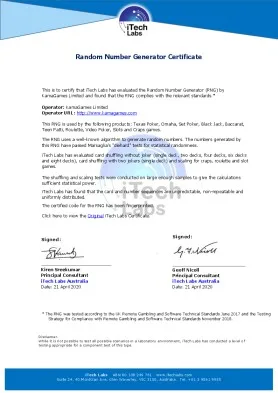
- iTech Labs: An accredited testing laboratory specializing in online gaming software quality assurance, RNG evaluations, and math model auditing.
Our technical auditor, Rahul Sen, regularly verifies that platforms host genuine game streams connecting directly to these certified provider infrastructures.
Provably Fair Technology: Cryptographic Verification in Crash Games
The emergence of crash games like Spribe's Aviator and SmartSoft's JetX introduced Provably Fair technology, which allows players to independently verify the fairness of every round using open-source cryptography.
Provably Fair Verification Workflow
- Server Seed: Operator generates a secret 16-character seed and hashes it using SHA-256 before the round begins.
- Public Hash: The encrypted hash is displayed to players prior to bet placement, proving the outcome was already locked in.
- Client Seeds: The first three players who place bets generate client seeds on their devices.
- Merged Calculation: Server seed + Client seeds are combined to calculate the final flight multiplier.
- Post-Round Verification: After the flight crashes, the unhashed server seed is revealed. Players can paste it into any SHA-256 tool to verify that the math matches the pre-round hash.
Why Predictor Bots and Hack APKs Cannot Work
Because Provably Fair outcomes are generated using combined cryptographic hashes that require inputs from both the server and live players, external prediction tools cannot function.
Claims made on Telegram, YouTube, or social media advertising "Aviator Predictor APKs" or "AI Signal Bots" are phishing scams. These tools cannot intercept or predict cryptographic hashes, and downloading them often leads to malware infections or stolen account credentials.
For a full technical breakdown of seed generation, read our detailed guide on Provably Fair Technology and our investigative report on Aviator Predictor Scams.
Cybersecurity Protocols and Data Protection
Protecting personal and financial information requires rigorous cybersecurity safeguards across every web page and mobile application:
| Security Measure | Operational Implementation |
|---|---|
| SSL/TLS Encryption | 256-bit certificates securing all data paths |
| Cloudflare / DDoS Shield | Continuous mitigation of volumetric attacks |
| Account Authentication | Multi-factor login alerts & SMS verification |
| Session Expiration | Automatic logout after inactive windows |
| MFS Tokenization | Direct wallet gateway integration |
Transport Layer Security (SSL/TLS)
Every legitimate gaming portal must implement 256-bit SSL (Secure Sockets Layer) or TLS (Transport Layer Security) encryption. This ensures that personal information—such as player passwords, registration details, and withdrawal requests—is fully encrypted in transit, preventing third-party interception on public Wi-Fi or cellular networks.
Protecting Local Mobile Financial Services (MFS)
A critical security priority for Bangladeshi players is safeguarding mobile financial wallets like bKash, Nagad, and Rocket:
- Never Share Your PIN or OTP: Legitimate gaming platforms never request your secret wallet PIN or one-time password (OTP). Transactions should be initiated either through an official automated gateway or by completing a standard cash-in through verified agent accounts.
- Verify Cashier Details: Always confirm recipient agent numbers directly inside the official cashier interface, as operators periodically rotate numbers for liquidity management.
- Avoid Suspicious Payment References: When transferring funds through personal mobile wallets, never include reference notes like "betting" or "casino" to prevent automated compliance flags. For practical advice, see our guide on Avoiding Mobile Wallet Freezes.
Licensing and Regulatory Frameworks
Operating within a recognized international regulatory framework provides an essential baseline of consumer protection. Reputable platforms hold licenses issued by established gaming authorities, such as:
- The Curaçao Gaming Control Board (GCB): Operates modern regulatory supervision requiring certified game software, verified capital reserves, and anti-money laundering (AML) controls.
- The Malta Gaming Authority (MGA): One of the strictest licensing jurisdictions in Europe, enforcing rigorous player fund segregation and responsible gaming safeguards.
- Kahnawake Gaming Commission: An established international regulator overseeing software integrity and dispute resolution for digital operators.
Our researchers cross-reference license numbers directly with regulatory registries to confirm that operating certificates are active and valid.
Frequently Asked Questions
What does RNG certification mean on an online gaming site?
RNG certification means that an accredited, independent testing laboratory (such as GLI or eCOGRA) has audited the operator's software source code across millions of simulated rounds. The audit confirms that game outcomes are mathematically random, conform to published Return to Player (RTP) figures, and operate free from manipulation.
How can a player verify that an Aviator crash game round was fair?
Click on the Provably Fair icon located in your game history for the round in question. Copy the revealed server seed and client seeds, then paste them into any open-source SHA-256 hash calculator. The resulting hash must match the pre-round hash displayed before the flight began, mathematically proving the outcome was not altered.
Can customer support agents see my bKash or Nagad wallet PIN?
No. Customer support agents should never ask for your mobile wallet PIN or one-time verification password (OTP). Transactions processed through automated payment gateways or agent cash-ins only require entering your phone number and the resulting Transaction ID (TrxID). If anyone asks for your PIN, disconnect immediately and report the incident.
How do I identify pirated or counterfeit slot software?
Open your web browser's developer console (or inspect network activity) while loading a game. Authentic slots load assets directly from the game provider's verified servers (e.g., *.pragmaticplay.net or *.jiligames.com). If the game loads from an unverified, generic IP address or unknown domain, it is likely an unauthorized copy with altered payout rates.
What should I do if I suspect a game result was glitched or unfair?
Immediately take a screenshot of your screen, capturing the round ID, timestamp, and account balance. Contact customer support via live chat, provide the round ID, and request a technical review. You can also review our step-by-step guidance on the Complaints and Dispute Resolution page.
Consumer Safety Notice: While verified technical security safeguards protect software fairness, real-money gaming involves genuine financial risk. Never wager funds required for living expenses or personal commitments. Players must be at least 18 years of age. For free and confidential assistance with problem gambling, visit our Responsible Gaming Portal.
Frequently Asked Questions
RNG certification means that an accredited, independent testing laboratory (such as GLI or eCOGRA) has audited the operator's software source code across millions of simulated rounds. The audit confirms that game outcomes are mathematically random, conform to published Return to Player (RTP) figures, and operate free from manipulation.
Click on the Provably Fair icon located in your game history for the round in question. Copy the revealed server seed and client seeds, then paste them into any open-source SHA-256 hash calculator. The resulting hash must match the pre-round hash displayed before the flight began, mathematically proving the outcome was not altered.
No. Customer support agents should never ask for your mobile wallet PIN or one-time verification password (OTP). Transactions processed through automated payment gateways or agent cash-ins only require entering your phone number and the resulting Transaction ID (TrxID). If anyone asks for your PIN, disconnect immediately and report the incident.
Open your web browser's developer console (or inspect network activity) while loading a game. Authentic slots load assets directly from the game provider's verified servers (e.g., `*.pragmaticplay.net` or `*.jiligames.com`). If the game loads from an unverified, generic IP address or unknown domain, it is likely an unauthorized copy with altered payout rates.
Immediately take a screenshot of your screen, capturing the round ID, timestamp, and account balance. Contact customer support via live chat, provide the round ID, and request a technical review. You can also review our step-by-step guidance on the [Complaints and Dispute Resolution](/complaints-resolution.md) page. --- *Consumer Safety Notice: While verified technical security safeguards protect software fairness, real-money gaming involves genuine financial risk. Never wager funds required for living expenses or personal commitments. Players must be at least 18 years of age. For free and confidential assistance with problem gambling, visit our [Responsible Gaming Portal](/responsible-gaming.md).*